
Building Programs, Shaping Institutions
LEADERSHIP & STRATEGYLead
Here’s a question I keep coming back to: what does it actually mean to lead academically?
Not to manage, not to administer, not to hold the existing structure together until the next review cycle — but to genuinely lead. My working answer is that it means building the infrastructure — programs, people, processes, and partnerships — that allows an institution to become more fully itself. That’s been the organizing idea of my career. These pages try to show what that looks like in practice.
Program Development
I’ve heard people describe new program development as a committee process. In my experience, that’s a description of how programs stall. The programs that actually launch — the ones that survive DQAB, build durable faculty, and enrol real students — emerge from something different: a clear-eyed understanding of what the labour market actually needs, honest assessment of what the institution can actually sustain, and the patience to build the stakeholder relationships that make a submission credible rather than merely compliant. I’ve led that full cycle multiple times. I understand and lead every stage of it, including the stages nobody warns you about.
1
Develop
2
Review
3
Launch
Master of Data Science — NYIT Vancouver
STATUS: LAUNCHED FALL 2025
The case for a professionally oriented data science graduate program in Metro Vancouver had been building for years: a regional economy increasingly dependent on analytics, machine learning, and data-informed decision-making, combined with a significant gap in applied graduate training. I led this program from initial scoping through curriculum development, faculty recruitment planning, DQAB submission, and launch. The Master of Data Science enrolled its first cohort in Fall 2025.
Key design decisions included a deliberately applied curriculum with strong industry partnership and practicum components, ensuring graduates are immediately deployable in BC’s technology sector.
Master of Computer Science — NYIT Vancouver
STATUS: Launched Spring 2026
Building on the momentum of the Data Science program, the Master of Computer Science addresses a different learner profile: those seeking rigorous theoretical grounding alongside advanced applied skills. This program is currently completing DQAB review and is expected to launch in Spring 2026.
Master of Occupational Therapy — NYIT Vancouver
STATUS: SUBMISSION PREPARED
Health sciences programming requires a distinct kind of partnership development: accrediting bodies, clinical placement networks, and provincial health authorities all have stakes in program design. I have been coordinating those relationships in parallel with the curriculum work, ensuring the submission will be supported by the infrastructure that makes OT programs viable, not merely approvable. My approach ensured the program would complement, not compete with, UBC's Occupational Therapy placements schedule.
Doctor of Osteopathic Medicine — Canada’s First
STATUS: MULTI-GOVERNMENT PARTNERSHIP DEVELOPMENT
The most ambitious program development initiative I have been involved with is also the most complex: establishing Canada’s first Doctor of Osteopathic Medicine program. This has required sustained engagement with federal and provincial governments, accreditation bodies, clinical partners, and institutional leadership across multiple organizations. One concrete outcome of that work is the Hospital Density & Physician Coverage Analysis Tool I built specifically to model clinical training capacity across BC hospital sites — integrating the CPSBC physician registry against the provincial hospital dataset to answer the accreditation question that matters most: can you actually train students here? The program development work and the tool that came out of it are a good illustration of how I tend to operate. The problem needed solving, nothing off the shelf came close, so I built it. The work is ongoing — and it has taught me more about the intersection of academic policy, government relations, and institutional will than any single project in my career.
Launch
DQAB & Accreditation in BC
The Degree Quality Assessment Board is the regulatory body that governs degree-granting authority in British Columbia. For institutions operating under the University Act or the Independent School Act, every new degree program — and many significant program modifications — requires DQAB review and approval before a single student can be admitted.
I have navigated this process from both sides: as an institutional administrator preparing submissions, and as someone deeply familiar with the Ministry of Post-Secondary Education’s expectations through my work with the Independent Degree Granting Institutions of BC Society. That dual perspective matters.
DQAB submissions require more than compliance. They require a persuasive argument that the program is needed, that the institution is equipped to deliver it with quality, and that students will be served by it. I approach each submission as both a regulatory document and an institutional narrative — because that is what reviewers are actually reading.
What I’ve Learned from the Process
- Labour market evidence is necessary but not sufficient — reviewers want to see that the program is uniquely positioned, not merely filling a general gap.
- Faculty qualifications and governance structures need to be documented with precision. Reviewers look for evidence that the institution can sustain the program, not just launch it.
- Community and industry partnership letters carry significant weight when they are specific — vague letters of support are easily spotted and discounted.
- Post-approval, the relationship with DQAB continues: cyclical program reviews and outcome reporting require the same rigor as the original submission.
For institutions considering new programs, expanding into professional fields, or navigating program modifications, I am available for consultation. I have been through the process enough times that I can map the path clearly — and help you avoid the most common points of failure.
System & Sector Leadership
My work in post‑secondary education has consistently operated at the system level, bridging institutional leadership, shared infrastructure, and public‑sector collaboration. I have led organizations and initiatives where success depends on trust, governance, and long‑term stewardship rather than organizational visibility or scale.
Post‑Secondary Sector Stewardship
Founding President of the Independent Degree Granting Institutions of British Columbia (IDGI‑BC), providing province‑wide leadership on quality assurance, policy alignment, and sector sustainability. I convene institutional leaders, represent collective interests, and serve as an ongoing liaison with the BC Ministry of Post‑Secondary Education and DQAB.
Shared Infrastructure & Digital Governance
Executive leadership in the planning, governance, and delivery of enterprise digital infrastructure supporting multi‑institution and multi‑stakeholder environments. My focus has consistently been on reliability, security, transparency, and long‑term sustainability rather than short‑term innovation cycles.
Government & Public‑Sector Engagement
Extensive experience working productively with ministries, regulators, and public institutions across post‑secondary and K–12 education. I am fluent in translating policy, accountability frameworks, and public‑interest obligations into operational systems and collaborative outcomes.
Member‑Driven Organizations
Leadership of board‑accountable and member‑serving organizations where authority is earned through credibility, responsiveness, and trust. I have built governance structures that respect institutional autonomy while advancing collective capacity and shared services.
IDGIBC Society
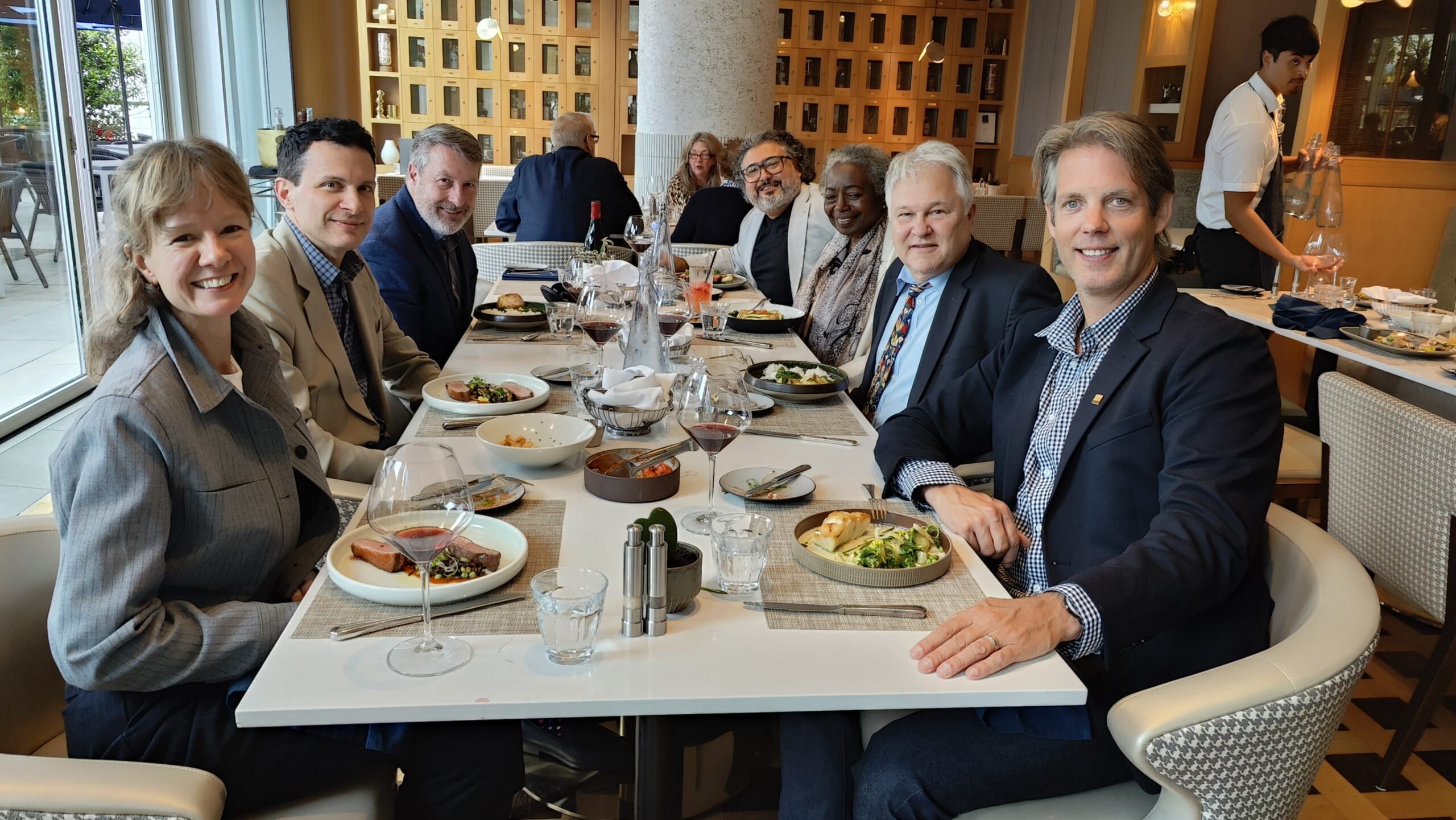
In March 2025, I became the founding President of the Society of Independent Degree Granting Institutions of BC (IDGIBC) — a formalized provincial consortium representing all independent institutions with degree-granting authority in British Columbia.
The society exists because BC’s independent degree-granting sector had long needed a collective voice. Individual institutions were each navigating government relationships, quality assurance frameworks, and sector-wide challenges in isolation. IDGIBC changes that.
What the Society Does
- Collaborates directly with the Ministry of Post-Secondary Education and Future Skills on sector-wide quality assurance policy and academic standards.
- Creates shared resources and best practices across member institutions, reducing duplication and raising the collective floor of academic excellence.
- Provides a structured forum for senior academic leaders to address common challenges — from AI governance to program review methodology to Indigenous education frameworks.
- Publishes an online academic journal (launching 2026) designed to surface scholarship from within BC’s independent sector.
- Hosts an annual conference that has become a meaningful gathering point for academic administrators across the province.
As President, I work closely with the Ministry and with the presidents and VPs Academic of member institutions. This gives me an unusually current and comprehensive view of BC’s post-secondary landscape — what is working, where policy is heading, and how institutions of different types and sizes are navigating shared challenges.
A practical footnote: several of the software tools in my portfolio exist because of IDGIBC. The conference scheduling and management system was built when generic event platforms failed to handle the multi-institutional complexity of our annual conference. The academic journal CMS with peer-review protocols was built because we wanted a journal platform that sector administrators could actually use without a dedicated technical team. I mention this because it illustrates something I believe about institutional leadership: if the infrastructure doesn’t exist to support the work you need to do, you build it.
IDGI-BC
Faculty Excellence
The quality of an institution’s academic programs is ultimately a function of the quality of its faculty — and the quality of its faculty is substantially a function of how well they are supported, evaluated, and developed. This is not a peripheral function of academic leadership. It is close to the centre of it.
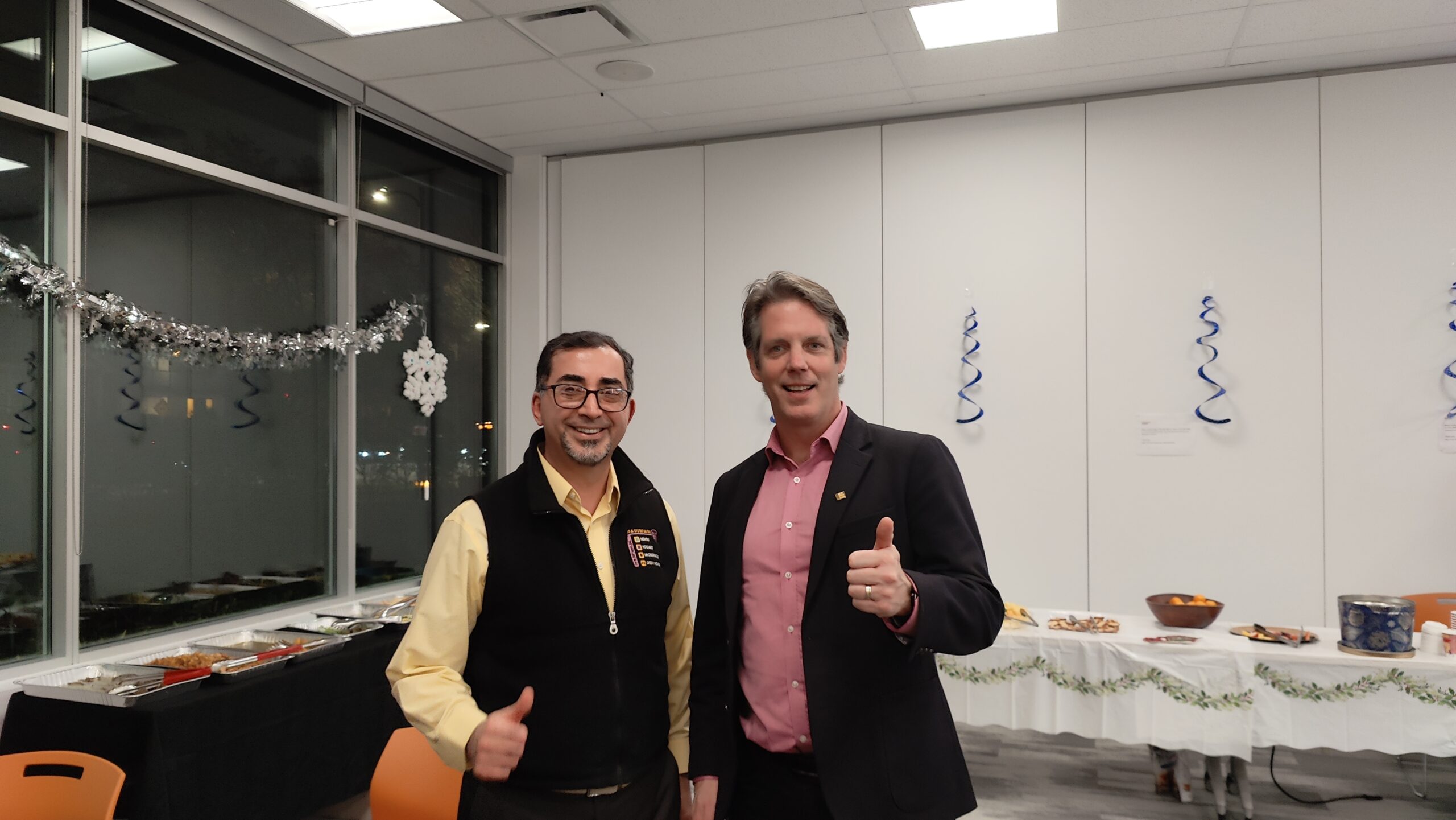
In 2019, I founded the Vancouver Centre for Faculty Excellence at NYIT Vancouver — building its programs, its infrastructure, and its culture from the ground up.
What the Centre Does
- New Faculty Orientation: A structured onboarding program that introduces new faculty not just to institutional policies, but to the philosophy of teaching at a graduate-focused institution and the specific expectations they will be held to.
- Teaching Observation & Coaching: I conduct regular classroom and online teaching observations across departments, providing detailed written feedback and coaching conversations. These observations are integrated into the reappointment and promotion process — they are developmental documents, not surveillance instruments.
- Faculty Resource Centre: A comprehensive online hub (built in Canvas LMS) housing pedagogical guides, assessment frameworks, technology tutorials, and AI adoption resources — available to faculty at any hour.
- Professional Growth Portfolios: I redesigned the faculty evaluation framework to centre on growth over time rather than snapshot performance. Faculty maintain ongoing reflective portfolios that document their development as teachers, scholars, and colleagues. I also designed the software that manages this process. (See: Software & Innovation)
- AI Adoption Support: As generative AI has entered the classroom, faculty have needed both practical guidance and conceptual framing. I provide confidential consultations to help faculty think through their approach — not just “what tools to use,” but “what do I actually believe about the role of AI in my discipline, and how does that shape my course design?” To support this work I’ve also built two specific tools: an AI-assisted grading consistency reviewer that helps faculty self-assess patterns in their own marking, and an AI-powered syllabus refinement tool that analyses alignment between stated learning outcomes, assessment design, and course policies. Both are described in detail in the Software & Innovation section.
My Core Philosophy
Faculty development works when it is built on trust. Faculty need to believe that the people supporting them are genuinely invested in their growth — not managing risk, not generating compliance documentation, not checking boxes. That trust takes time to build and is easily destroyed by a single badly handled evaluation or an institutional process that feels punitive rather than generative.
My doctoral research examined what recently appointed faculty believe about the expectations placed on them — and the gap between what they were told to expect and what they actually experienced. That research has shaped how I approach this work: with a commitment to transparency, with genuine curiosity about each faculty member’s context, and with the long view in mind.
Academic Governance
Academic Governance
Effective academic governance is unglamorous, time-consuming, and indispensable. It is the mechanism by which institutions make decisions that are durable — because they have been made with the right people in the room, through the right processes, with the right record.
I serve on the NYIT University Senate and on multiple governance committees, including the AI Executive Steering Committee, Curriculum Committee, Indigenization Committee, Library Committee, Security & Privacy Committee, and Emerging Technologies Committee. I also represent NYIT Vancouver in governance structures that connect the Vancouver campus to the university’s New York-based leadership.
A particular area of focus has been AI governance: developing institutional policies for the appropriate use of generative AI by faculty and students, building frameworks for evaluating AI tools before adoption, and ensuring that the institution’s approach to AI is driven by educational values rather than vendor enthusiasm. Connected to this, my long-standing work in digital threat assessment and online privacy — including a browser fingerprinting and privacy awareness demonstration tool I built for training educators, healthcare administrators, and law enforcement — has directly informed how I approach data privacy obligations, browser security policy, and the institutional responsibility to understand the tracking landscape that students and staff navigate every day.
I believe that academic leaders who disengage from governance — delegating it entirely to faculty committees or treating it as an administrative burden — lose the trust of the faculty they serve. Showing up, doing the reading, and contributing substantively to governance processes is part of the job.
Serve