
needs aligned, custom functionality
Custom WordPress PluginsEffective
Project overview
STATUS: LIVE — lmyc.ca / Members Area
The Problem
Like many volunteer‑run, asset‑heavy organizations, the Lower Mainland Yacht Co‑Op (LMYC) operates at the intersection of people, boats, marinas, finances, and regulatory obligations. Off‑the‑shelf WordPress plugins can handle fragments of this reality — bookings or forms or listings — but none reflect how a cooperative yacht club actually functions day‑to‑day.
The result was predictable: operational knowledge scattered across emails, spreadsheets, PDFs, and institutional memory; duplicated data entry; unclear accountability; and unnecessary friction for members and volunteers trying to do the right thing.
What was needed was not a single monolithic system, but a cohesive set of purpose‑built tools that map directly to LMYC’s real workflows — and that live exactly where members already are: the members‑only area of the website.
The Solution
A suite of custom WordPress plugins, designed and built specifically for LMYC, using modern WordPress practices and — unapologetically — the power of AI as a development accelerator. AI was used as a force multiplier for drafting, refactoring, and testing, but architectural decisions, data models, security controls, and user workflows were designed intentionally around the club’s needs.
Each plugin solves a discrete operational problem, but they share common principles:
- Built for real LMYC roles (members, race managers, maintenance leaders, treasurer)
- Integrated with WordPress permissions and the members area
- Front‑end tools where members need them; admin depth where leaders need it
- Data that is structured, exportable, and durable
All plugins described below are active and in daily use.
Design Philosophy
These plugins were not built as generic products. They were designed as institutional infrastructure: systems that encode policy, preserve organizational memory, and reduce reliance on individual volunteers remembering “how things are usually done.”
The consistent pattern across all tools is deliberate:
- Policy becomes validation rules, not PDF documents
- Roles map to capabilities, not informal authority
- Repetition becomes structure, then automation
- Reporting is a by‑product of doing the work, not an extra task
This approach makes the club more resilient, not just more efficient.
What I Built
- Sailboat & Marina Manager
- Sailboat Booking Manager
- Maintenance Management System
- Expense Manager
- Volunteer Hour Manager
- Racing Series Manager
Purpose:
Create a single source of truth for boats and marinas.
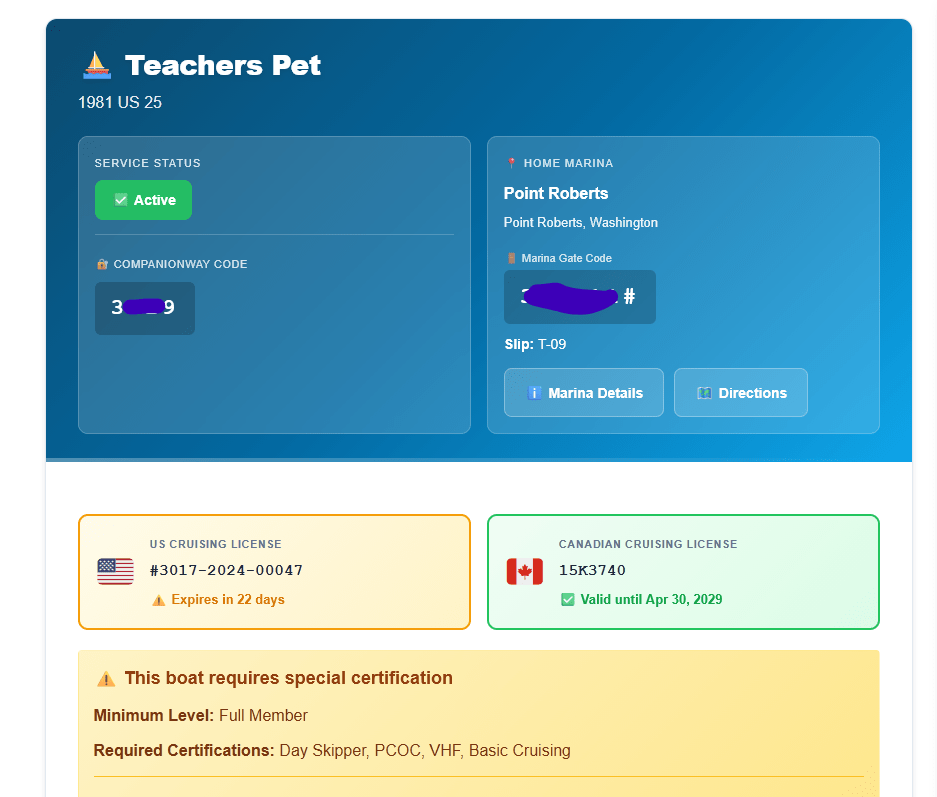
This plugin defines sailboats and marinas as first‑class entities, with structured metadata covering specifications, access codes, service status, licensing, restrictions, and location details. It powers rich member‑facing “Boat Cards” and “Marina Cards,” while giving maintenance leaders fast dashboards for operational updates.
Utility:
- Members see current, trustworthy boat and marina information
- Maintenance leaders update critical fields without touching WordPress admin
- License expiries, access codes, and restrictions are visible and current
Purpose:
Encode booking rules into the system instead of enforcing them socially.
This plugin extends sailboats with booking‑specific constraints: certification requirements, berth counts, maximum consecutive days, day‑sailing limits, and outstation logic. These rules live with the boat data itself, reducing ambiguity and preventing invalid bookings before they occur.
Utility:
- Fewer exceptions and manual interventions
- Booking logic reflects policy, not memory
- Scales as the fleet and membership grow
Purpose:
Replace ad‑hoc maintenance reporting with a transparent, auditable lifecycle.
Maintenance issues are tracked as structured records tied directly to boats and marinas, each with a defined status lifecycle
(Reported → Scheduled → In Progress → Completed),
categories, priorities, photos, recurring schedules, and due dates. Leaders work from purpose‑built views — list, table, and calendar — depending on whether they are triaging, planning, or executing work.
Members submit issues through a guided front‑end form; maintenance leaders manage execution through dashboards designed for fast, low‑error updates rather than WordPress admin complexity.
Utility:
- Members report issues once, clearly, and in the right place
- Maintenance leaders plan work across boats, weeks, and seasons
- Recurring tasks and historical records support budgeting and AGM reporting
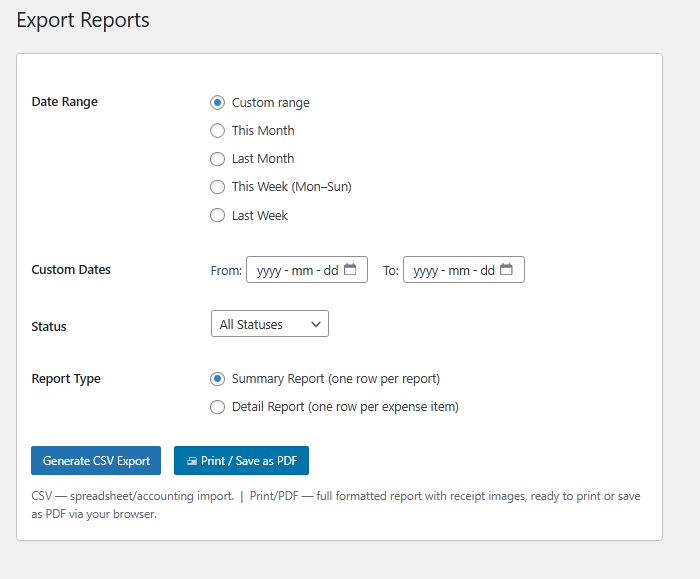
- CSV exports turn operational work into defensible governance data
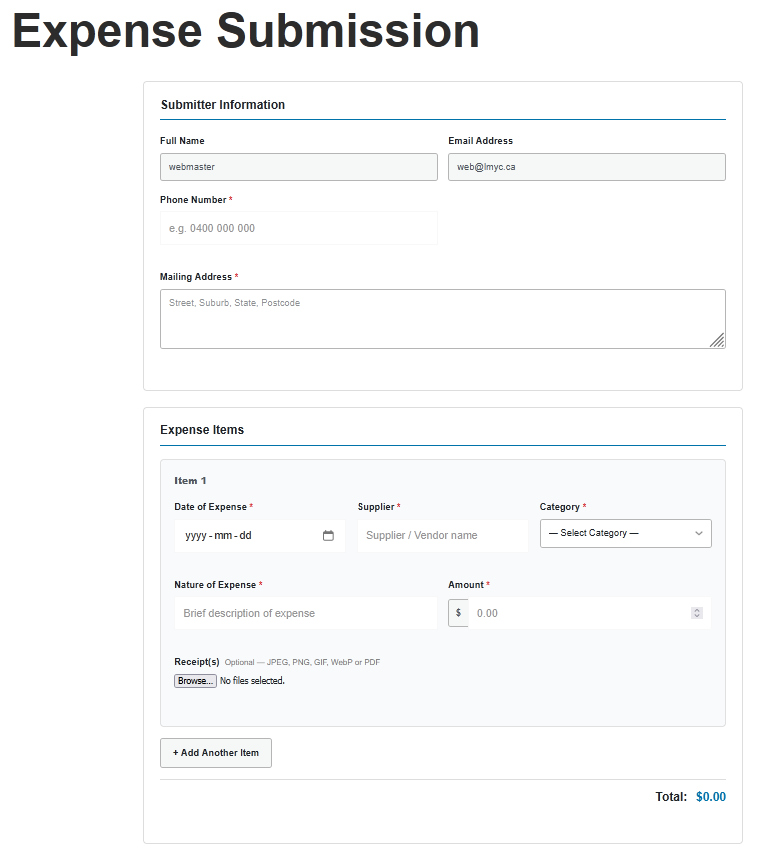
Purpose:
Bring financial accountability into the members area without friction.
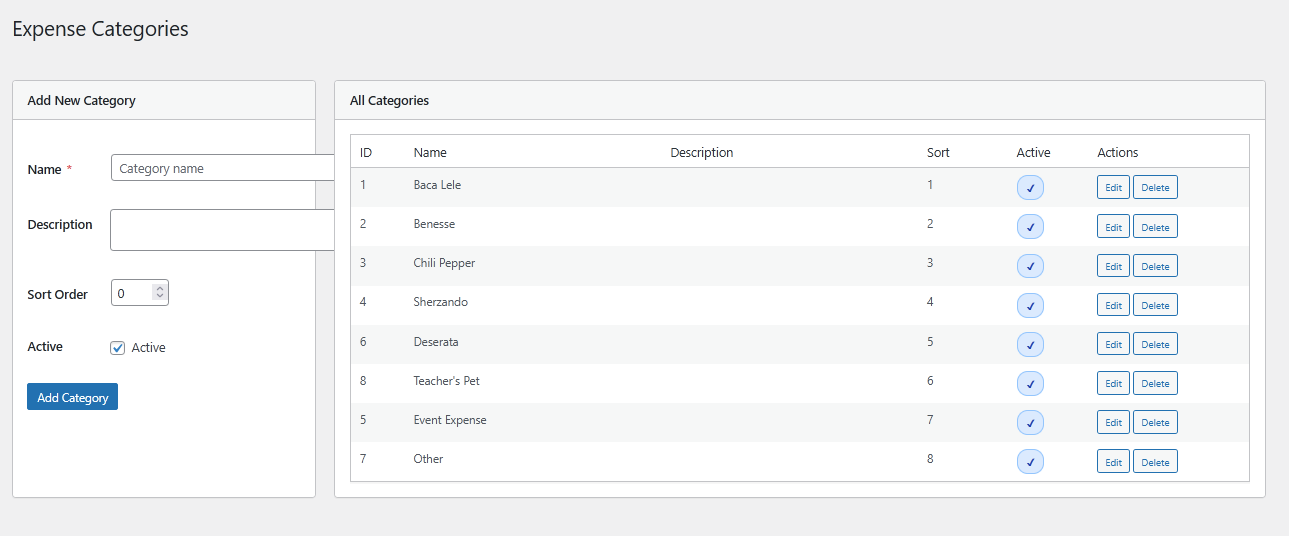
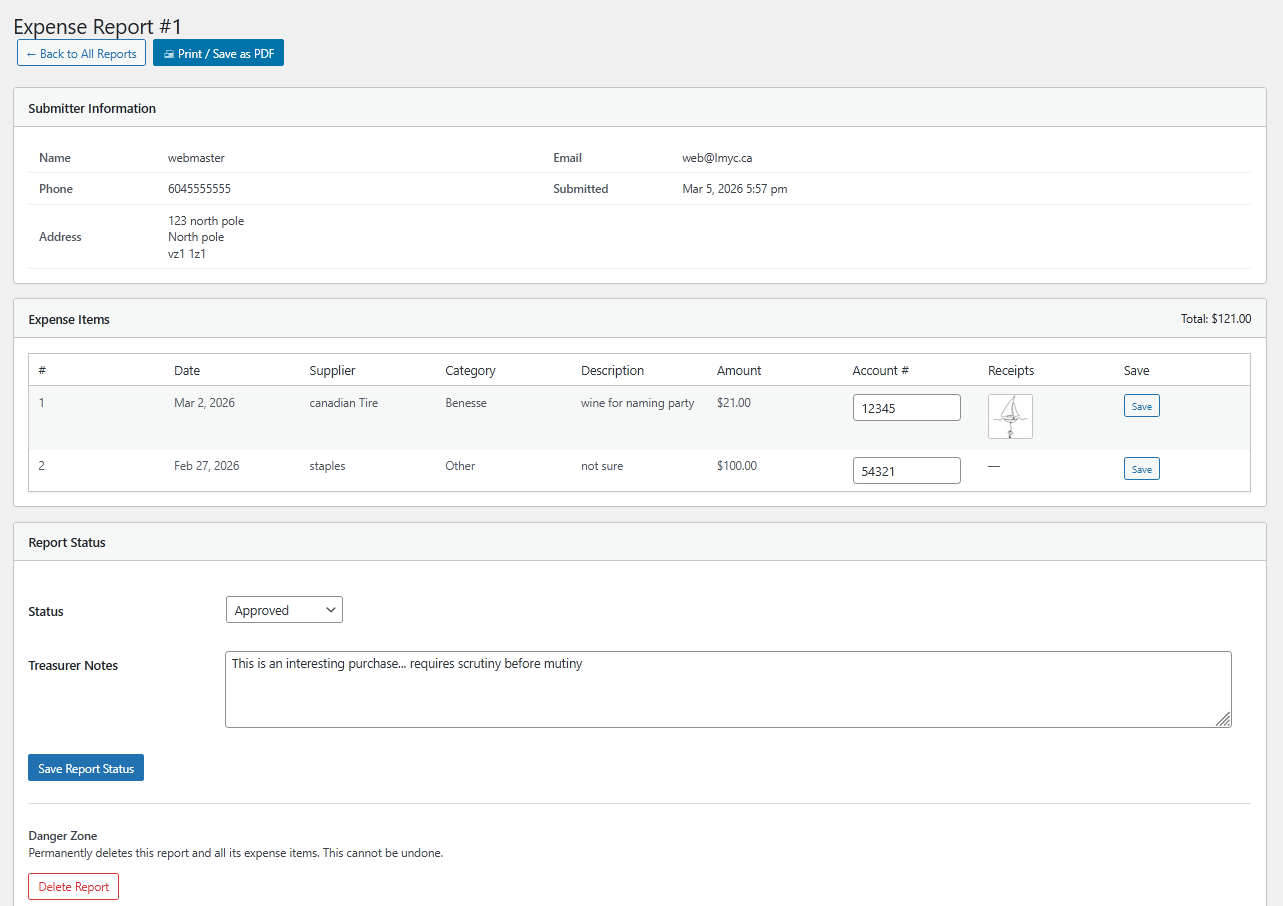
Members submit expense claims through a secure front‑end form with receipts. Treasurers review, approve, deny, and mark payments using a clear status workflow, with full audit trails and CSV exports for accounting.
Utility:
- Fewer emails and lost receipts
- Clear approval and payment states
- Clean handoff to accounting tools
Purpose:
Make volunteer contribution visible, measurable, and valued.
Members log volunteer hours against boats and work types. They can view their own history and statistics, while leaders see club‑wide dashboards, trends, and volunteer‑by‑category matrices. The system supports edits, suggestions, exports, and longitudinal analysis.
Utility:
- Members see their contribution accumulate in real time
- Leaders can identify burnout, gaps, and engagement patterns
- Volunteer labour becomes data, not folklore
Purpose:
Support sailboat racing with the same rigor as other operations.
This plugin manages boats, series, races, results, and PHRF handicapping (TOD/TOT). Results are published through a unified public hub, with printable racebooks and CSV exports for transparency and archival use.
Utility:
- Race managers focus on racing, not spreadsheets
- Members access results in one consistent place
- Historical performance data is preserved
Expense Reports
Expense Categories
Expense Report Details
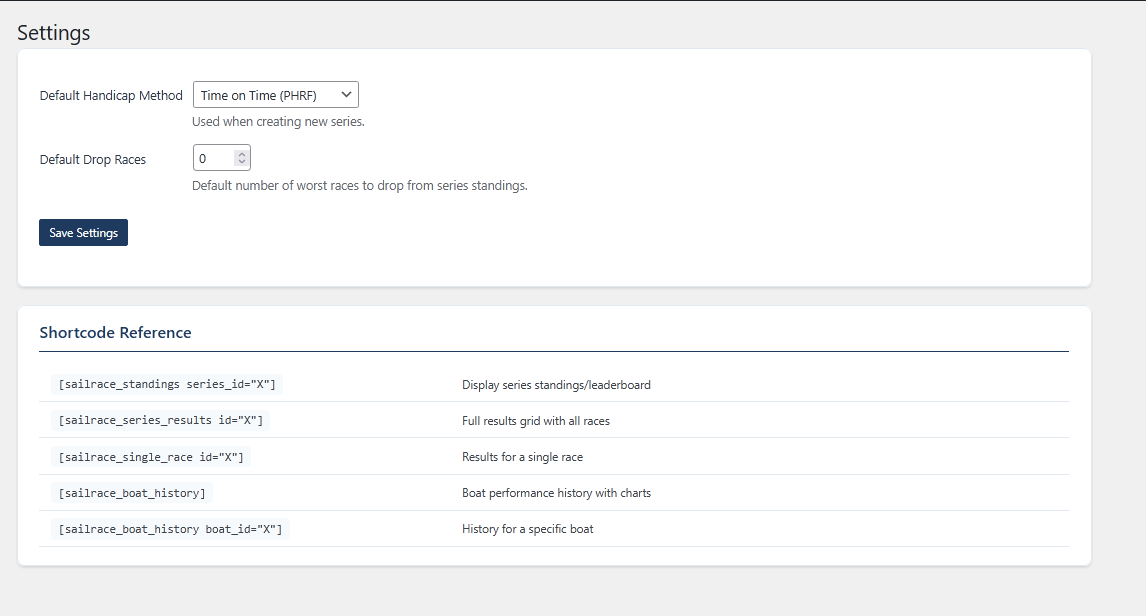
Race Manager Settings Information
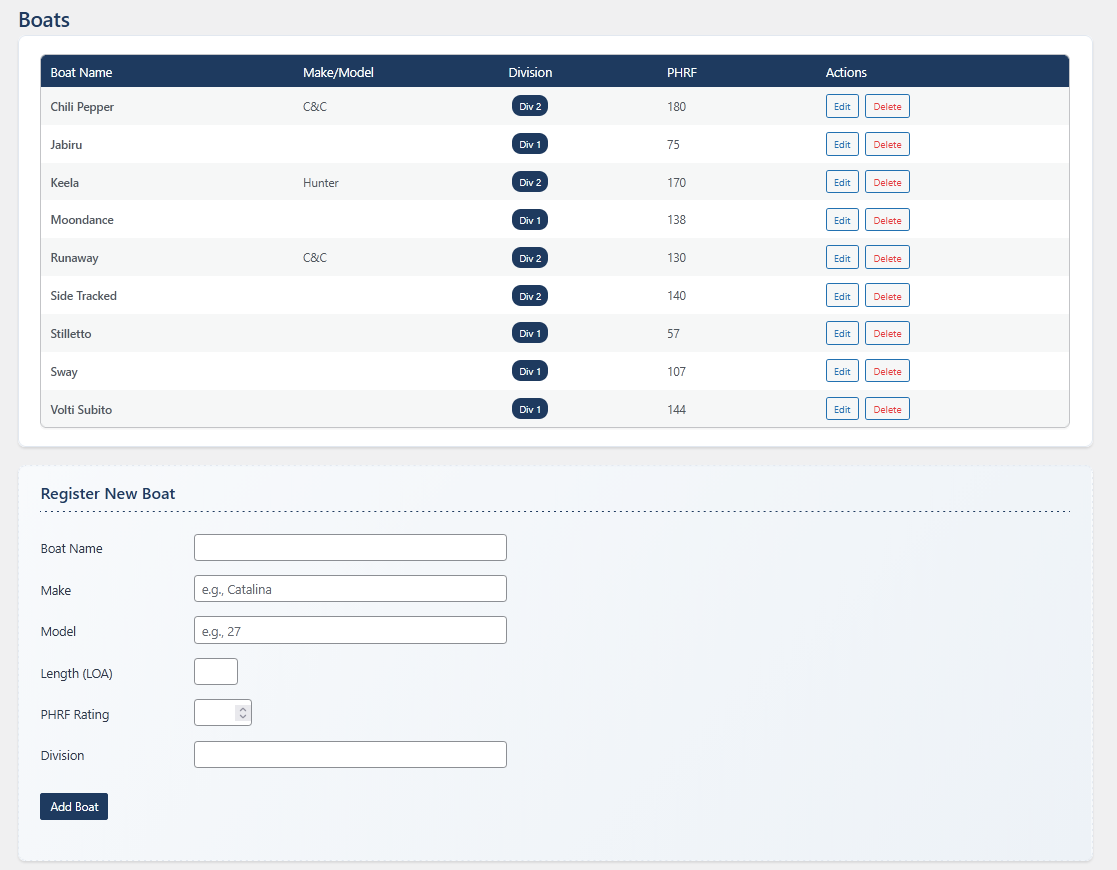
Race Boat Configuration
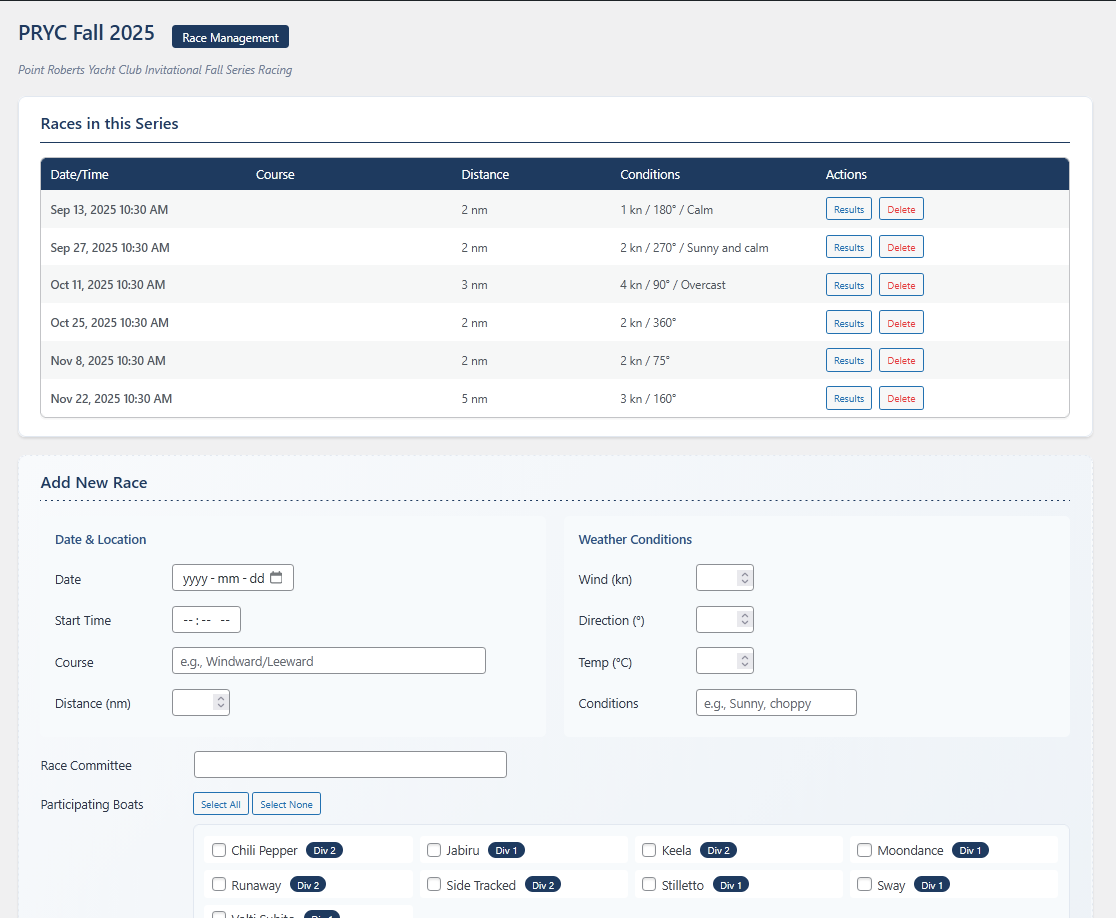
Race configuration page
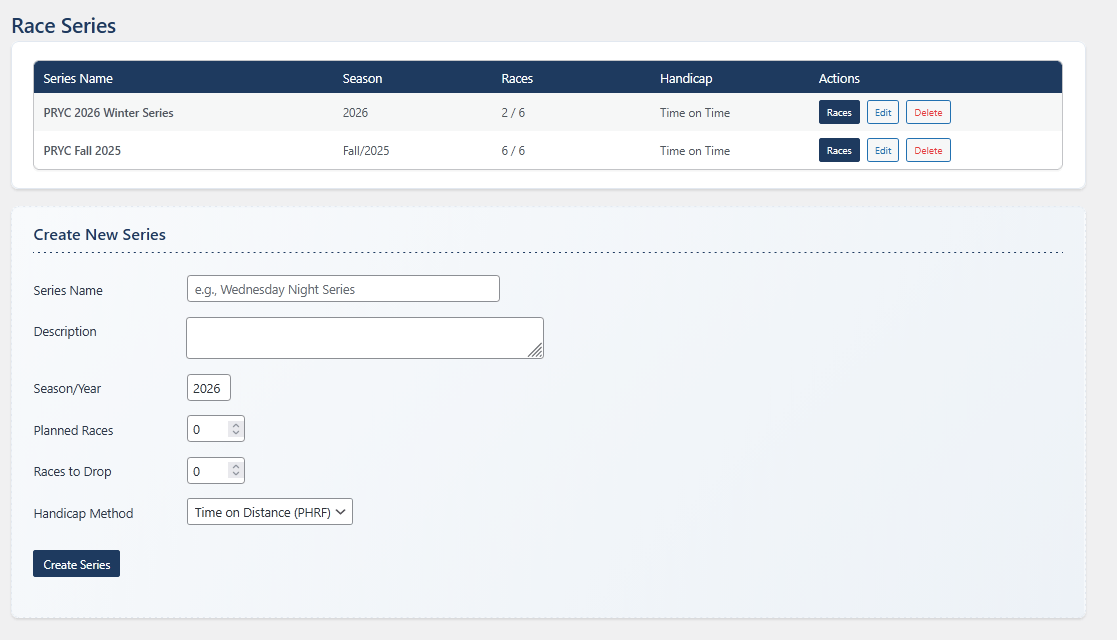
Race Series Configuration
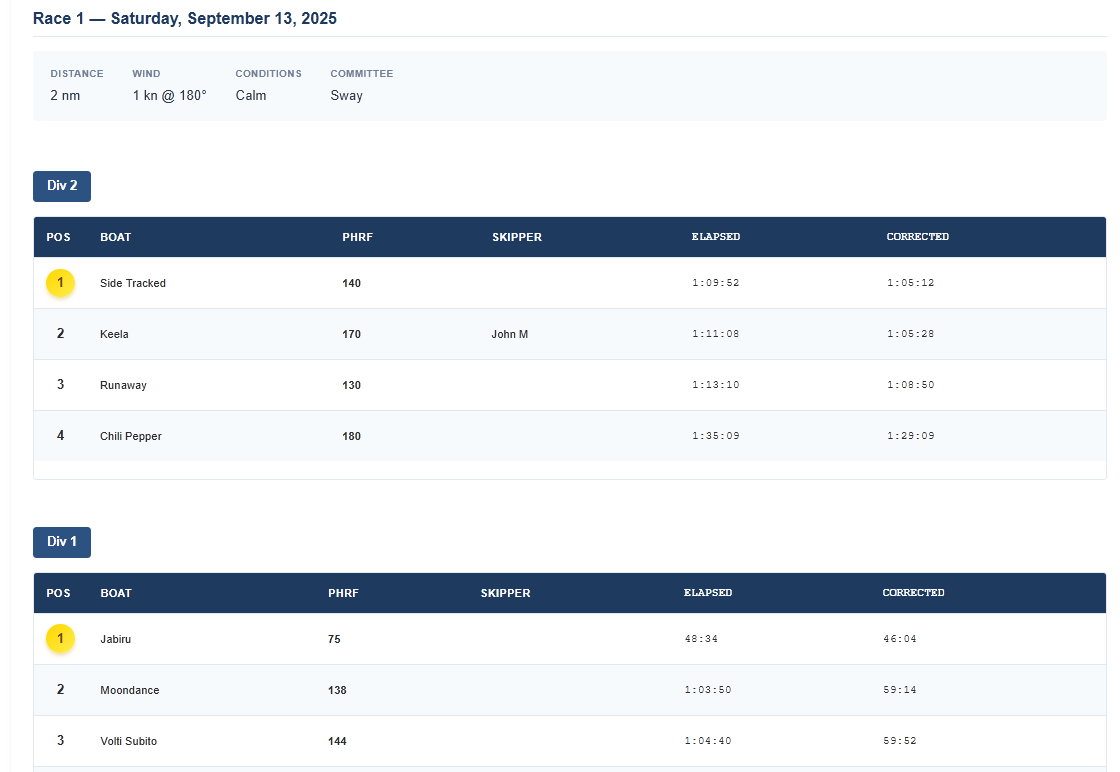
Race results view 2
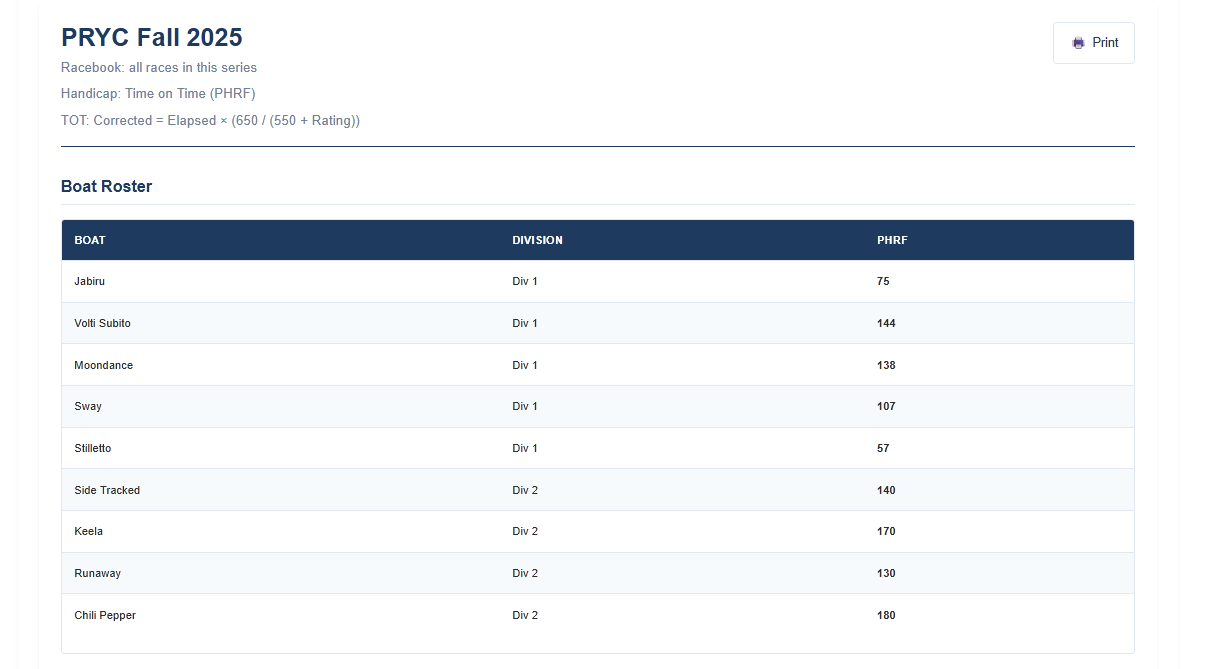
Race results view
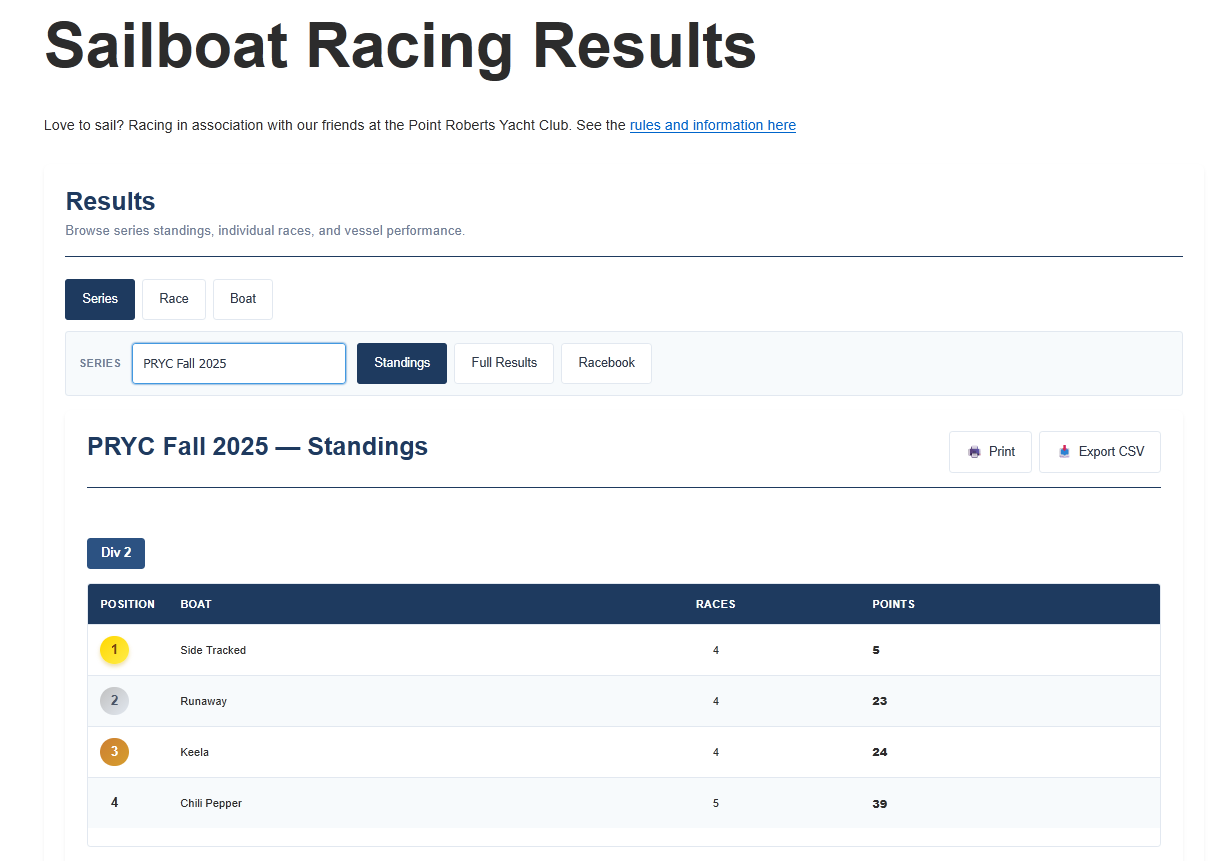
Live Sail Racing Results
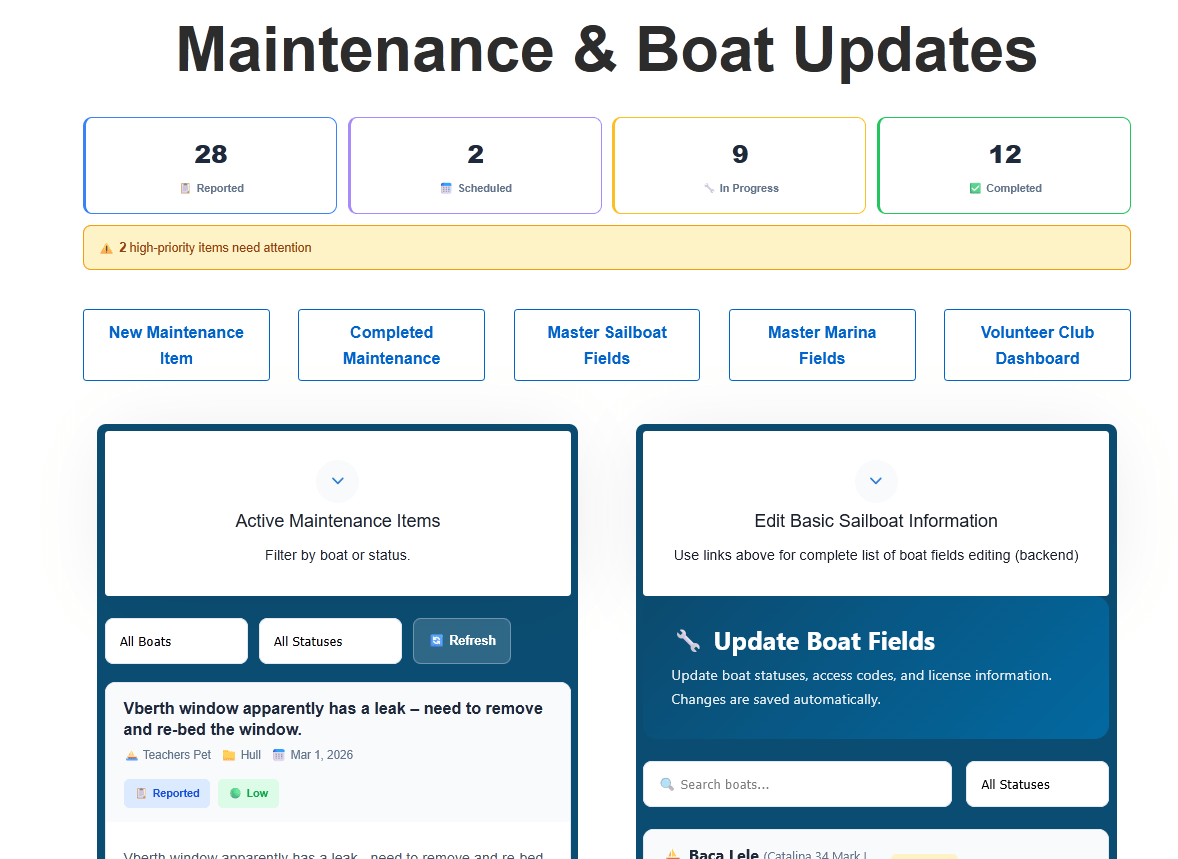
Maintenance Leader Dashboard
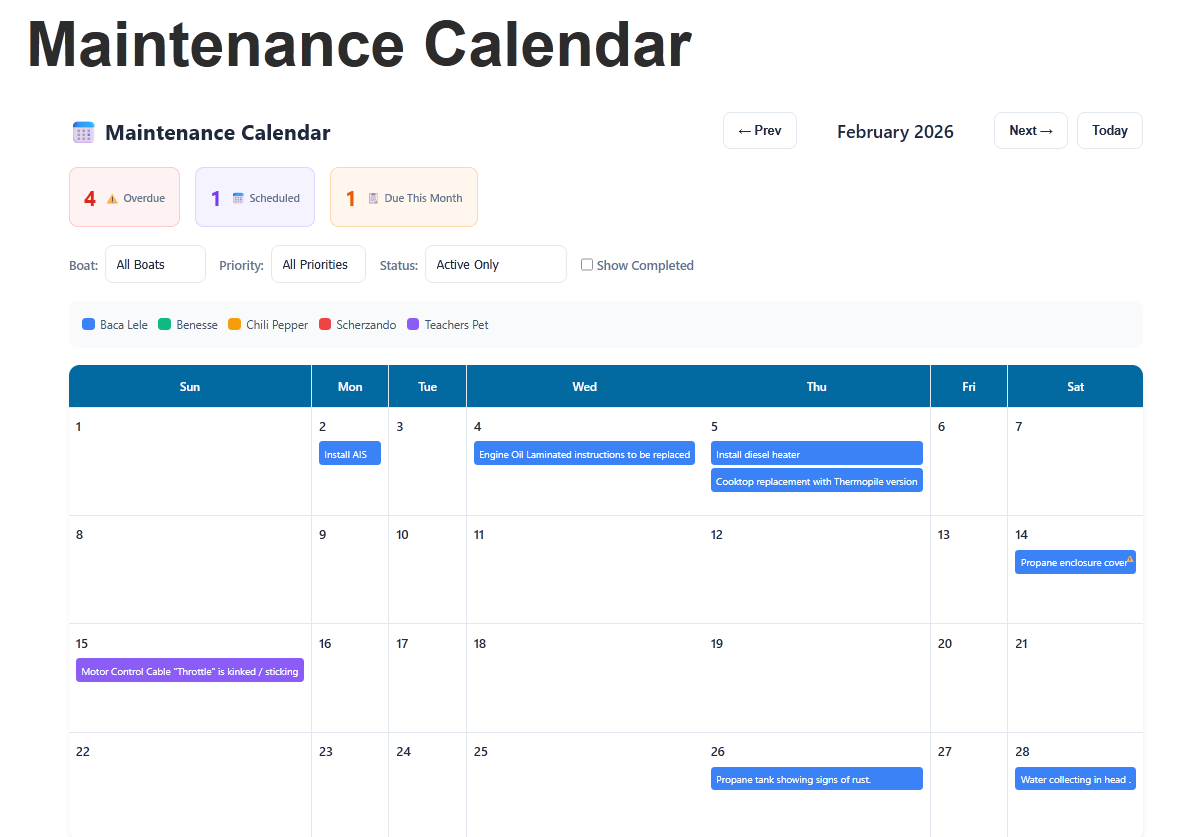
Maintenance Calendar
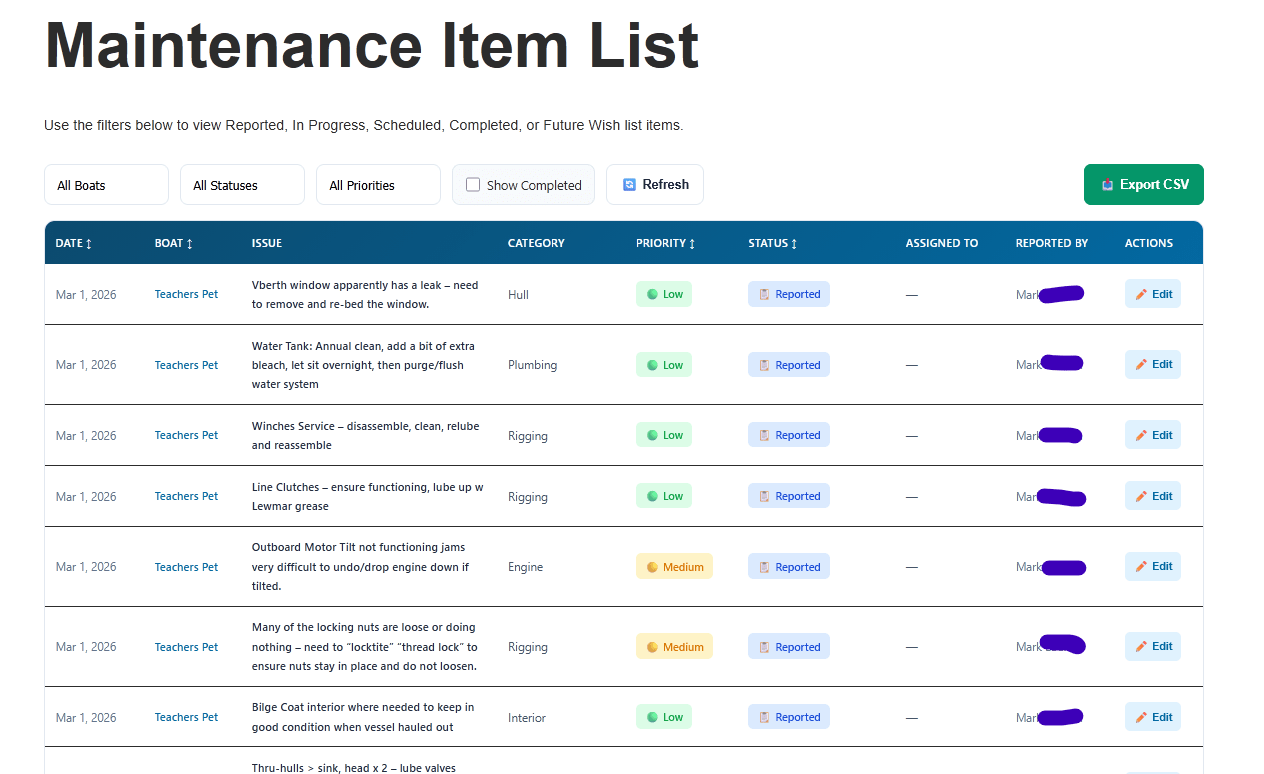
Maintenance Item List
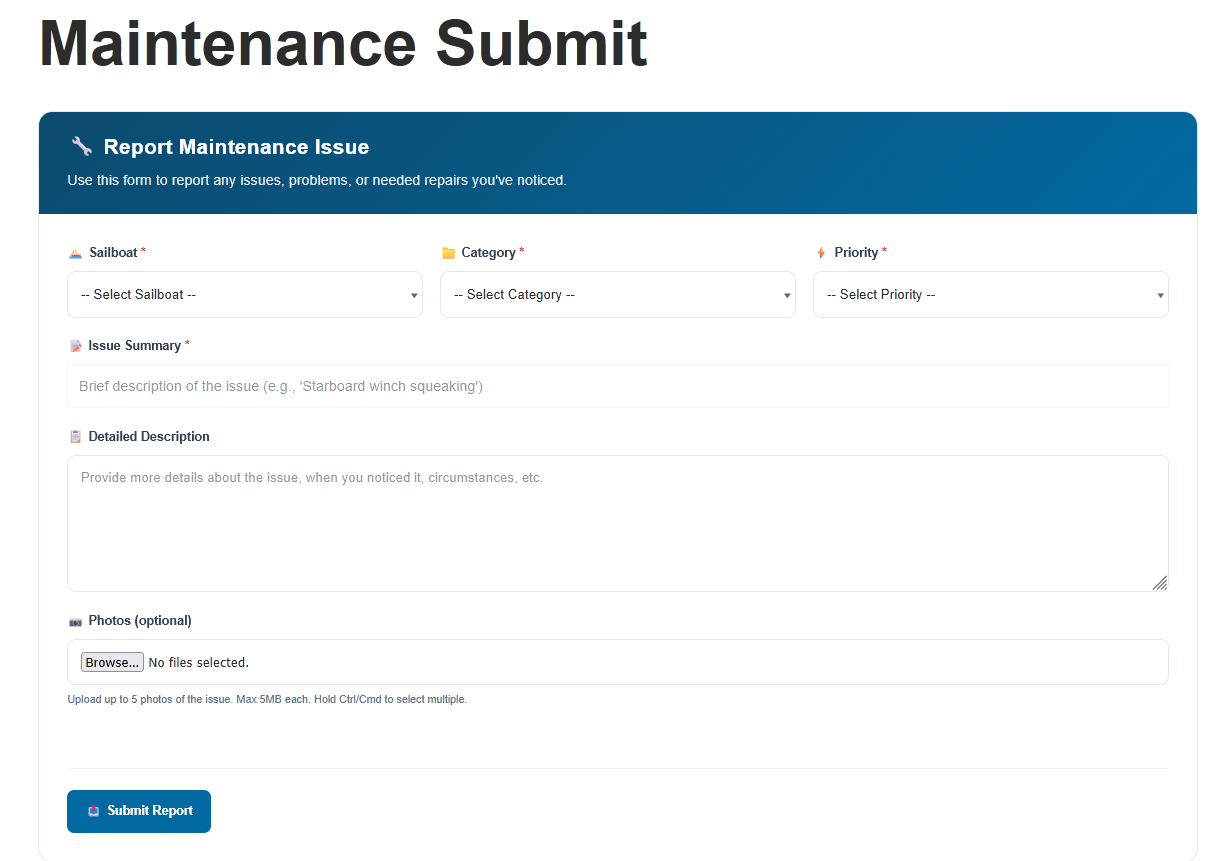
Maintenance Submit Item Frontend
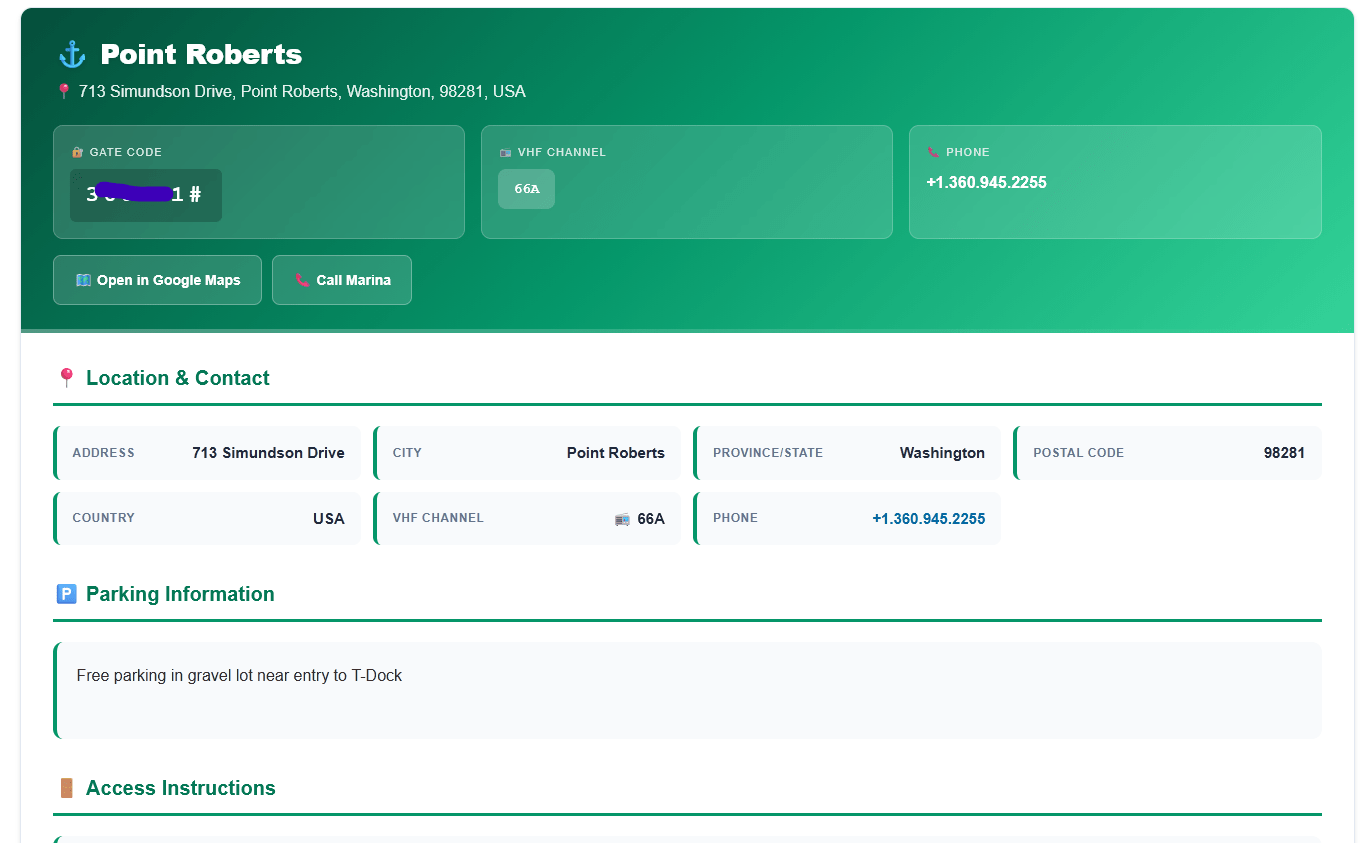
Marina Info Page (Top only)
Sailboat Info Page (top only)
Maintenance Menu
Marina Menu
Sailboat Manager Backend
Who Uses It
- Members booking boats, logging hours, submitting maintenance issues, and viewing up‑to‑date information
- Maintenance Leaders managing fleet health across dashboards and calendars
- Race Managers publishing accurate, professional race results
- Treasurers handling expenses without email chaos
- Board and Committees relying on exports and summaries instead of anecdotes
All usage happens inside the authenticated members' area — no parallel systems, no shadow spreadsheets.
What Changed
Before these plugins, LMYC operated with goodwill, email threads, and personal knowledge. After them, the club operates with institutional memory encoded in software.
Individually, each plugin solves a narrow problem. Taken together, they form an operational layer that mirrors how the cooperative actually works. The result is not just efficiency, but resilience: when volunteers rotate out, the system remains.
This project also demonstrates a broader point: modern administrators don’t just specify requirements — they can build the tools that make governance, transparency, and participation sustainable
Live
10

0 Comments